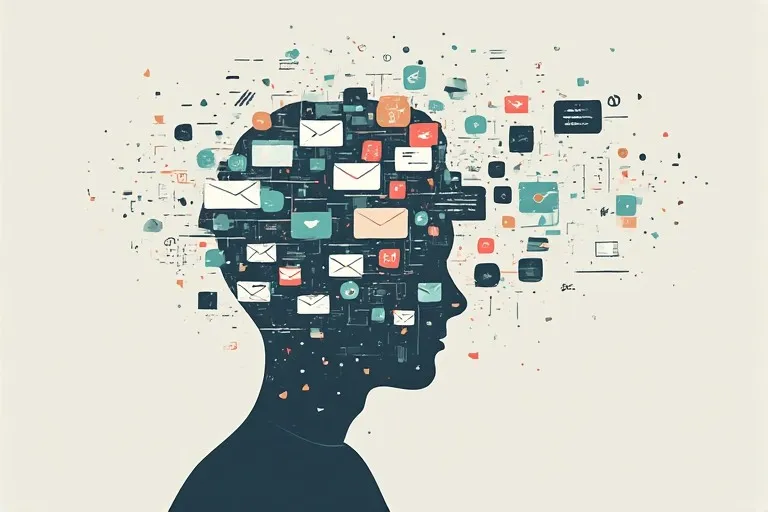
From Chaos to Collection: How to Turn Your Internet Discoveries Into a Personal Archive Worth Keeping
Photo: Trust Territory of the Pacific Islands, Department of Public Affairs, Public Information Office, Public domain, via Wikimedia Commons
Somewhere in your browser right now, there's a bookmark folder you haven't opened in two years. Maybe it's called "Stuff" or "Read Later" or, if you were feeling optimistic, "Inspo." Inside it: a graveyard of links to articles you swore you'd revisit, tools you meant to try, and rabbit holes you fell into at 1am that genuinely changed how you thought about something — at least for that night.
Here's the thing: those discoveries mattered. The problem isn't that you saved them. The problem is that you saved them badly.
There's a better way to do this. Not just a better app or a smarter folder structure — a genuinely different mindset. Think of yourself less like a passive internet browser and more like a curator. A collector. Someone who doesn't just stumble across interesting things online, but preserves them with intention.
Let's talk about how to actually build that.
Why Traditional Bookmarking Fails You
Browsers were never really designed for long-term knowledge management. The bookmark bar is great for sites you visit daily — your bank, your email, that one food delivery app. But for the interesting, weird, meaningful stuff you encounter while exploring the web? It's basically a black hole.
The core issue is that bookmarks strip context. You save a URL, but you don't save why you saved it, what you were thinking about at the time, or how it connects to anything else you care about. Six months later, a link that once felt urgent becomes completely opaque. What was this? Why did I care?
Good archiving isn't about storage. It's about retrieval — and more specifically, about making sure future-you can actually make sense of what past-you was so excited about.
The Personal Wiki Approach
If you haven't heard of tools like Obsidian, Notion, or the older but still-beloved TiddlyWiki, here's your introduction. These are personal knowledge management tools — basically, note-taking apps on steroids — and they're genuinely excellent for building a searchable, interconnected archive of your online life.
The big advantage here is linking. In a personal wiki, you don't just paste a URL. You write a sentence or two about why it matters, tag it with relevant topics, and link it to related notes you've already made. Over time, you build something that looks less like a list and more like a web — which, when you think about it, is a pretty fitting metaphor for what the internet actually is.
Obsidian is particularly popular in the US productivity community right now, and for good reason. It stores everything locally on your device as plain text files, which means you own your data and it'll be readable decades from now even if the company disappears tomorrow. For the kind of long-term archiving we're talking about, that matters.
Digital Scrapbooking: The Underrated Option
Not everyone wants to think in databases and tags. Some people are more visual, more instinct-driven — they want their archive to feel like something, not just function like something.
This is where digital scrapbooking tools come in. Apps like Are.na (a personal favorite among designers and researchers), Milanote, or even a creatively organized Pinterest board can serve as visual link collections that capture not just the URL but the vibe of what you're saving.
Are.na in particular has developed a cult following among people who take internet curation seriously. You create "channels" around themes or ideas, drop in links, images, quotes, and files, and the result is something that looks more like a mood board than a filing system. It's collaborative too — you can follow other people's channels and fork their collections into your own. Think of it as the anti-algorithm: discovery driven by human taste, not engagement metrics.
If you've ever made a physical scrapbook or kept a journal, this approach might click immediately. The goal isn't perfect organization. It's creating something that reflects how you actually think.
Going Deeper: Self-Hosted Options for the Serious Collector
For those who want full control — and we mean full control — self-hosted link databases are worth exploring. Tools like Shaarli, Linkding, or Wallabag can be installed on your own server (or a cheap VPS) and give you a private, searchable archive that nobody else can access, monetize, or shut down.
This is admittedly more technical than dropping a link into Notion, but the payoff is real. You get complete ownership of your collection, no subscription fees, and the kind of long-term stability that cloud-based services can't always promise. For anyone who's ever had a beloved app shut down and lost years of saved content — and if you've been on the internet long enough, you probably have — this approach is worth the setup time.
Wallabag in particular functions like a self-hosted Pocket, letting you save full article text (not just links) so you're protected even if the original site goes offline. Given how much content disappears from the web every year, that's not a trivial feature.
The Habit That Makes Any System Work
Here's the honest truth: the best archiving system is the one you'll actually use consistently. And consistency comes from friction-reduction.
Whatever method you choose, make the saving step as fast as possible. Browser extensions that let you clip content with one click. Mobile share-sheet integrations that let you send links directly to your archive from your phone. Keyboard shortcuts. The less thinking required in the moment of discovery, the more likely you are to actually capture it.
The organizing step can happen later — during a weekly review, a lazy Sunday afternoon, or whenever you feel like poking around your own collection. Think of saving and organizing as two separate activities. Conflating them is why most people give up.
Also: don't aim for perfection. An imperfect archive you actually use is infinitely more valuable than a perfectly designed system you abandoned in February.
You're Not Just Saving Links. You're Documenting How You Think.
There's something quietly meaningful about building a personal internet archive. Over time, it becomes a record of your curiosity — what you were interested in, what questions you were trying to answer, what corners of the web you wandered into during different chapters of your life.
That's worth preserving. Not just for productivity reasons, not just because you might need to reference something later, but because the internet is genuinely vast and strange and full of things worth holding onto.
Most of us are passive consumers by default. We scroll, we click, we move on. Building an archive is an act of intentionality — a way of saying this mattered enough to keep.
So go rescue that "Stuff" folder. Not by organizing it into oblivion, but by building something around it that actually reflects who you are and what you care about. The internet has been handing you raw material for years. It might be time to start making something with it.